

Visual inspection alone cannot guarantee that a PCB functions electrically.
Even when a board:
Looks perfect under AOI
Shows no internal voids under X-ray
It may still contain open circuits, shorts, or marginal connections that only electrical testing can detect.
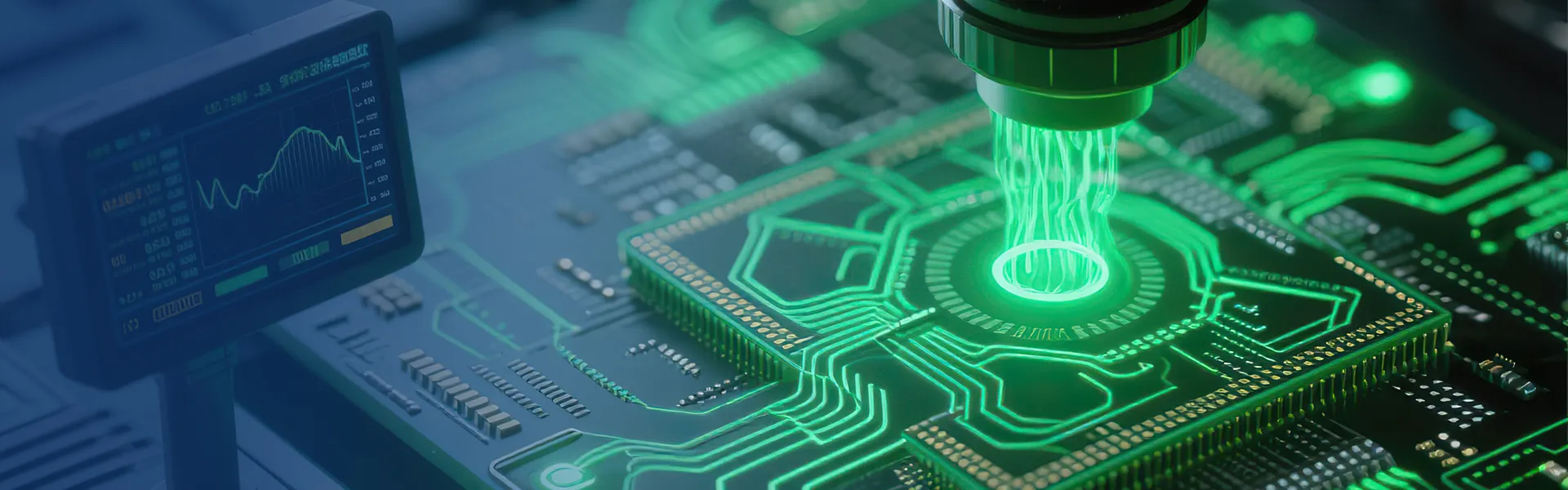
Electrical testing (E-Test) verifies the actual electrical integrity of a PCB before assembly or shipment.
Inspection sequence:
AOI Inspection in PCB Manufacturing
X-Ray Inspection in PCB Manufacturing
What Is PCB Electrical Testing?
PCB electrical testing applies electrical signals to a bare PCB to verify:
● Continuity of all nets
● Absence of unintended shorts
● Conformance to design connectivity
Unlike AOI or X-ray, E-Test directly evaluates electrical functionality, not physical appearance.
Defects Detected by Electrical Testing
Fixture-Based (Bed-of-Nails) Testing
How It Works
- ● A dedicated fixture contacts predefined test points
- ● Signals are applied simultaneously to multiple nets
Advantages
- ● Fast test speed
- ● Suitable for high-volume production
Limitations
- ● High upfront fixture cost
- ● Less flexible for design changes
Flying Probe Testing
How It Works
- ● Movable probes contact test points sequentially
- ● No dedicated fixture required
Flying Probe Testing
How It Works
- ● Movable probes contact test points sequentially
- ● No dedicated fixture required
What Electrical Testing Cannot Detect
Electrical testing has clear boundaries.
Limitations of E-Test
- ● Cannot assess copper thickness
- ● Cannot detect internal voids
- ● Cannot predict long-term reliability
- ● Cannot identify cosmetic issues
For example, a via with thin copper plating may pass E-Test but fail after thermal cycling.
Reliability risk:
PCB Reliability Testing Explained
Electrical Testing vs Inspection Methods
Electrical testing has clear boundaries.
Limitations of E-Test
- ● Cannot assess copper thickness
- ● Cannot detect internal voids
- ● Cannot predict long-term reliability
- ● Cannot identify cosmetic issues
When Electrical Testing Is Applied
Electrical testing has clear boundaries.
Limitations of E-Test
- ● Cannot assess copper thickness
- ● Cannot detect internal voids
- ● Cannot predict long-term reliability
- ● Cannot identify cosmetic issues
Test Coverage and Netlist Accuracy
Electrical testing has clear boundaries.
Limitations of E-Test
- ● Cannot assess copper thickness
- ● Cannot detect internal voids
- ● Cannot predict long-term reliability
- ● Cannot identify cosmetic issues
Electrical Testing and Yield Control
Electrical testing has clear boundaries.
Limitations of E-Test
- ● Cannot assess copper thickness
- ● Cannot detect internal voids
- ● Cannot predict long-term reliability
- ● Cannot identify cosmetic issues
Electrical Testing Cost Considerations
Electrical testing has clear boundaries.
Limitations of E-Test
- ● Cannot assess copper thickness
- ● Cannot detect internal voids
- ● Cannot predict long-term reliability
- ● Cannot identify cosmetic issues
How Electrical Testing Fits into a Quality System
- ● Fast test speed
- ● Suitable for high-volume production
Conclusion
Electrical testing has clear boundaries.
Limitations of E-Test
- ● Cannot assess copper thickness
- ● Cannot detect internal voids
- ● Cannot predict long-term reliability
- ● Cannot identify cosmetic issues